
Foundation
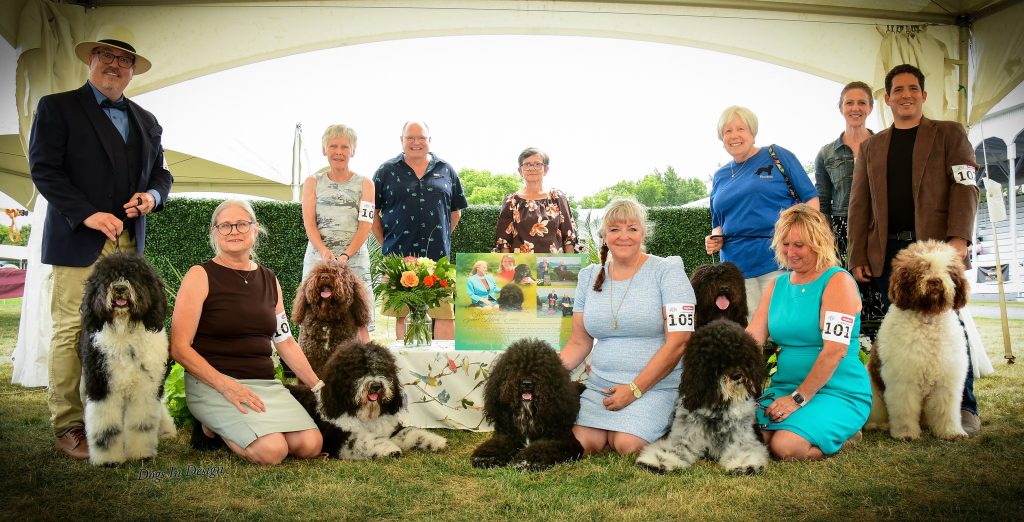
Founded on September 23, 2007, the Club has been created to bring together the amateurs and breeders of Barbet. Such a rare breed with an unsurpassed charm had to be taken care of by a group of passionates!
In March 2009, the Club started the necessary process to be officially recognized by the Canadian Kennel Club. The Club was officially accredited to be the National Club by the CKC on September 2, 2010.
Mission
The Club’s mission is to look after the interests of Barbet, to promote the breed, to improve it and to build a network comprising the breeders as a whole and the friends of the Barbet.
Objectives
With its commitment the Club wishes:
• To guide and encourage the breeders to follow the Code of Ethics of Club Barbet Canada and the Code of Practice of the Canadian Kennel Club for the well-being of the breed;
• To promote and encourage amateurs and breeders of the breed to participate in canine events organized for the Canadian Kennel Club;
• To hold events approved by the Canadian Kennel Club;
•To encourage and promote quality, to inform and educate while conforming to the official Canadian Kennel Club Breed Standard.
Administrative Council and Code of Conduct
Memberships, Code of Ethics, and Bylaws
Administrative Council
PRESIDENT:
Jean-Claude Surprenant
VICE-PRESIDENT:
Debra Boudreau
SECRETARY:
Susan Luyendyk
TREASURER:
Susan Luyendyk
DIRECTOR EASTERN REGION:
Jeremy Ludyka
DIRECTOR ONTARIO REGION:
Norie Hasspieler
DIRECTOR WESTERN REGION:
Vacant
DIRECTOR QUEBEC REGION
Carole Bouthillette
DIRECTOR MEMBERSHIPS:
Norie Hasspieler
COMMUNICATIONS DIRECTOR:
Janet Drewes Dewaele
OTHER BOARD MEMBERS
Paula Ballak
Code of Conduct
The Administrative Council (“AC”) participates and deliberates with the following principles:
• Administrative Council members are required to state conflict-of-interest positions and remove themselves from decision-making processes.
• Diversity of opinion is encouraged, expected, accepted and regarded as valuable.
• Administrative Council decisions (whether by consensus or majority vote) are collective positions and are not necessarily reflective of any individual AC member’s position.
• Voting against or abstaining from a vote on a motion is a legitimate expression of dissent or uncertainty on an issue.
• Opinions presented to the public and media represent collective decisions reached by the Administrative Council. Requests for this type of information should be made known to the President and Officers. The spokesperson should be the President (or his/her designate).
• Debate and disagreement is healthy and encouraged but after an open discussion and a democratic decision making process, all members will accept and publicly support the collective decision that has been reached.
• A member of the AC, speaking individually or on “behalf” of the Administrative Council, who is against a collective decision will refrain from criticizing or speaking on that issue in any forum.
• AC members are to refrain from public criticism of the Organization whether as a personal opinion or on “behalf” of the AC.
• AC members should resign from the Administrative Council if they find that they cannot abide by the above-noted principles.
The Administrative Council reserves the right to rescind an Officer’s membership as a result of a continuous inability to abide with the above-noted principles and procedures.